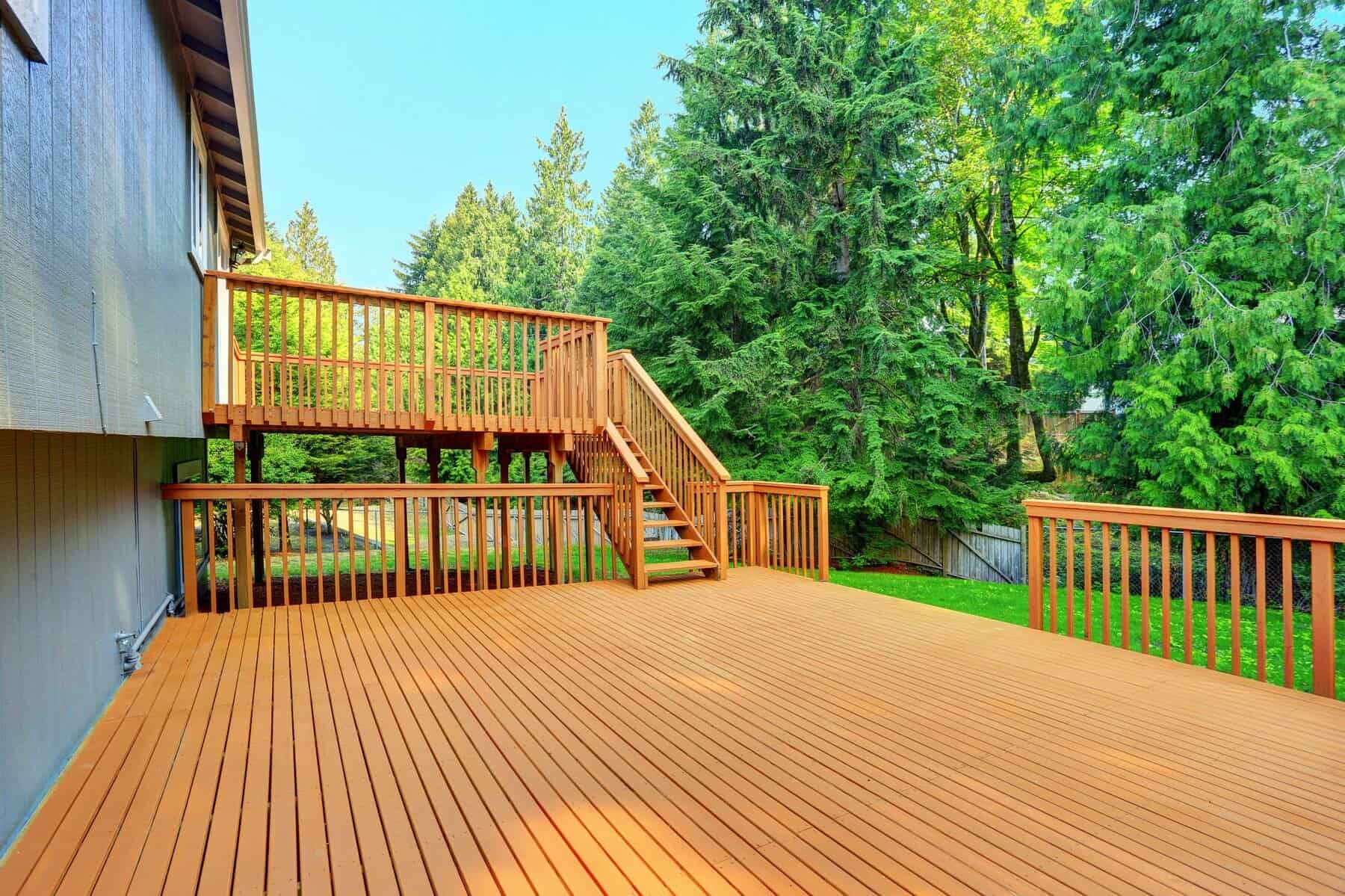
The question I get almost every season from homeowners across the Poconos is a familiar one: should I paint or stain my deck Poconos PA weather actually makes a real difference on? The honest answer is that deck painting vs staining is not a simple coin flip, and the choice plays out very differently here in Northeastern Pennsylvania than it does in warmer, more forgiving climates. Our winters are long, our freeze-thaw cycles hit hard, and the finish you put on your deck this season will either hold up or make a mess of the next one. Before you grab a can of anything, this breakdown from our deck and fence painting team at Pocono Pro’s should help you make a confident, informed call.
What “Deck Painting vs Staining” Actually Means
When homeowners talk about deck painting vs. staining, they’re describing two products that interact with wood in completely different ways.
Paint sits on top of the wood. It creates a solid, opaque film that covers the grain entirely and forms a hard protective layer. That barrier handles foot traffic and moisture reasonably well, but it does not flex. When the wood beneath it expands in summer heat and contracts in winter cold, the rigid film on top becomes tense. Eventually, it cracks, chips, and peels.
Stain soaks into the wood. Rather than forming a surface layer, stain penetrates the wood fibers and becomes part of the material. It moves with the wood through temperature and humidity changes, which is why stain fades gradually over time rather than peeling in sheets.
That difference in how each product sits (or doesn’t sit) on the wood shapes every other part of this comparison.
The Three Types of Deck Stain
Not all stain behaves the same. Here is how the main types compare:
| Stain Type | Wood Grain Visible? | Typical Lifespan | Best Used For |
|---|---|---|---|
| Transparent | Yes, fully | 1 to 2 years | New, clean wood in good condition |
| Semi-Transparent | Partially | 2 to 3 years | Slightly weathered wood |
| Solid | No | 3 to 5 years | Older wood that needs more coverage |
According to This Old House, less pigment allows more wood grain to show through, while more pigment provides longer-lasting protection. Solid stains look similar to paint from a distance, but they still penetrate the surface rather than building a film over it.
How Long Does Each Option Last?
Lifespan is usually where the deck painting vs staining conversation really gets going. Here are realistic numbers based on properly applied, high-quality products:
| Finish | Typical Lifespan | How It Fails |
|---|---|---|
| Paint | 5 to 10 years | Peeling, chipping, cracking |
| Solid Stain | 3 to 5 years | Gradual fading and wear |
| Semi-Transparent Stain | 2 to 3 years | Fading, gray wood showing through |
| Transparent/Clear | 1 to 2 years | Fades quickly with UV and foot traffic |
Paint wins on raw calendar longevity. But when paint fails, it fails loudly. You see peeling boards, bubbles, and flaking edges. Getting back to a paintable surface means scraping, sanding, and priming before anything new can go down. Stain fades gradually and quietly. Reapplication is typically a matter of cleaning the deck and brushing on a fresh coat, which is a much lighter lift.
For homeowners in Hawley, Lake Ariel, and Greentown who want to avoid turning a routine maintenance task into a weekend-consuming project, that maintenance difference matters a great deal.
Why the Poconos Climate Changes This Conversation
Most deck painting vs staining articles skip the climate discussion entirely. That is a problem when you live in Northeastern Pennsylvania.
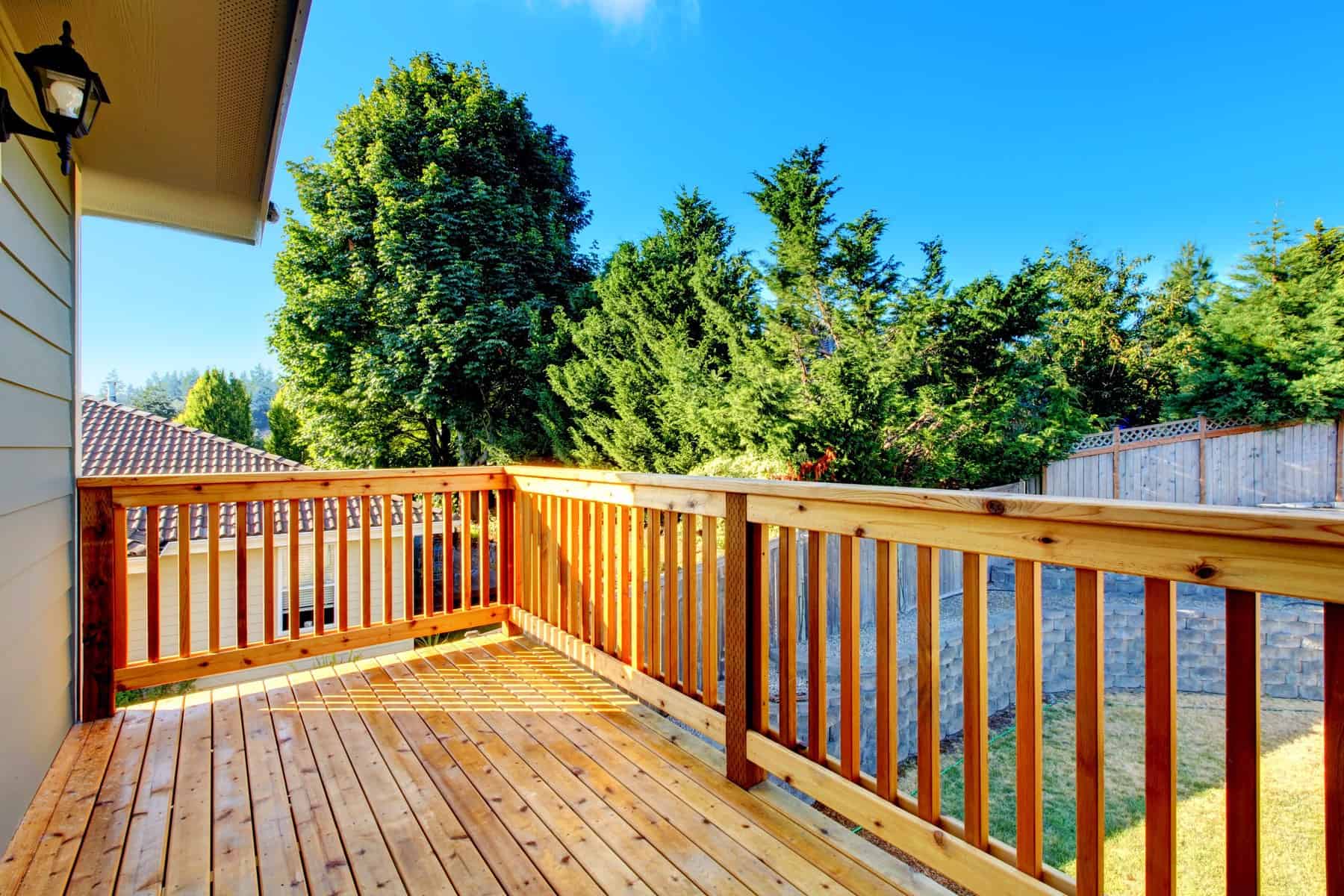
Freeze-thaw cycles are the biggest threat to any deck finish in the Poconos. Here is how it happens: water seeps into small cracks in the wood or the coating. Temperatures drop below freezing. That water expands as it turns to ice and pushes outward against whatever finish is sitting on top. Then temperatures rise, the ice melts, the pressure releases, and the cycle begins again. This process can repeat dozens of times over a single winter across Wayne, Pike, and Lackawanna Counties.
Paint, because it forms a rigid film on top of the wood, is more vulnerable to this cycle. The wood moves with the seasons. The painted film does not move with it. On flat, horizontal deck boards that take the full weight of snow, rain, and UV exposure, that tension leads to cracking and peeling faster than most homeowners expect.
Stain, because it is absorbed into the wood fibers, moves with the wood. This is why, in climates like ours, stain is the standard first recommendation for deck boards. As This Old House explains, staining creates a protective barrier that shields wood from moisture absorption and UV damage while allowing the wood to breathe naturally.
That said, paint makes sense in some situations in the Poconos. Those are covered below.
When Staining Is the Right Call
I recommend stain in most deck painting vs staining conversations because of how the Pocono climate treats painted wood. But here are the specific situations where stain is the clear choice:
If you are unsure how frequently your deck actually needs a recoat, our post on how often to stain a deck walks through a simple water test that tells you more than any calendar estimate.
When Painting Is the Right Call
Deck painting vs staining does not always tip toward stain. There are genuine cases where paint is the more practical decision:
One thing to be clear about: painted horizontal deck boards are among the highest-maintenance exterior surfaces we work on in Northeastern Pennsylvania. Knowing that before you commit helps set the right expectations.
The One-Way Street: Why Switching Matters
This part of the deck painting vs staining decision often gets skipped in the planning stage, and it is one of the most important things to understand before you choose.
If you stain your deck today, you can still move to paint later. Switching from stain to paint is relatively straightforward with the right prep work.
If you paint your deck today, getting back to stain is a major project. Removing paint from deck boards means chemical strippers, sanders, and a lot of time and labor. Many homeowners who paint their decks end up repainting indefinitely because the return path is too costly and disruptive.
This is why I always ask homeowners to think past this season. If you are on the fence and your wood is in good condition, starting with stain keeps your options open. Starting with paint does not.
Our post on how to prevent paint from peeling goes deeper into why even well-applied exterior paint requires proper prep and product selection to hold up in outdoor conditions like the ones we deal with here.
Prep Work Wins Every Time
No matter which side of the deck painting vs. staining decision you land on, the quality of your prep work matters more than the product in the can. This is true every time, without exception.
Here is what proper prep looks like before either finish goes down:
Skipping prep is the single biggest reason decks across the Poconos fail early. I have seen well-specified products fail in a single season because the surface was not ready. I have also seen basic products last for years because the prep was done correctly.
Our post on how long exterior paint actually lasts covers what really drives finish life on outdoor wood surfaces and why prep is always the deciding factor.